
Replacing old dental crowns in Bodrum starts with finding out why you want a change and whether the existing crown actually needs replacing. A chipped edge, looseness, discomfort or a change in appearance can justify an assessment, but an older crown is not automatically a failed crown. The condition of the tooth and surrounding tissues matters more than a photograph or the crown’s age alone.
For patients travelling from the UK, the important decisions include the treatment options, what may be discovered during assessment, how many appointments to allow and who will provide follow-up. This guide helps you prepare those questions. It does not diagnose an individual crown or promise that replacement can be completed within a particular holiday.

When should an old dental crown be assessed?
Book a dental assessment if a crown becomes loose, chips, develops a sharp edge or is associated with a persistent bad taste or discomfort. Cleveland Clinic’s patient guide to dental crowns identifies these as reasons to contact a dentist. A professional examination is needed to explain the cause and choose an appropriate response.
Separate functional concerns from cosmetic preferences when describing the problem. For example, a crown that feels comfortable but looks darker calls for a different discussion from one that moves when you chew. Tell the dentist whether a change happened suddenly, followed an injury or developed gradually.
- Which tooth or bridge is affected, and when did the problem start?
- Does it hurt spontaneously, when biting or with particular foods or drinks?
- Does the crown feel loose, rough or different from the surrounding teeth?
- Is your main concern comfort, chewing, appearance or more than one issue?
- Have you had any repair, root canal treatment or trauma involving that tooth?
A concern about appearance is valid, but it should not be used to skip an oral health assessment. Ask what would happen if you kept the existing restoration under review and what benefit replacement is expected to bring. You should understand the reason for treatment before agreeing to irreversible work.
Replacing old dental crowns in Bodrum: the assessment
Identify the restoration and the tooth underneath
First clarify whether the restoration is a single crown, part of a bridge or attached to an implant. Patients sometimes use the word cap or veneer for different types of dental work. Knowing what is present helps the dentist explain the options and request the right records.
Bring previous treatment summaries, radiographs and implant details if you have them. If you do not know the material or treatment date, say so rather than guessing. Ask which additional examinations or images are needed and why; do not arrange a new scan solely because a general website mentions one.
Explain your medical history, allergies and medicines, including supplements. Our patient information checklist can help organise this information. Never stop prescribed medication to prepare for a dental appointment without advice from the clinician responsible for it.
Discuss the uncertainty before removal
Ask what the dentist can establish while the crown is in place and what may only become clear later. Request an explanation of the proposed removal approach, the risks relevant to your tooth and the alternatives if the original plan changes.
Do not accept an online photograph as proof that the tooth underneath is healthy or that a new crown will definitely be possible. A preliminary proposal should identify its assumptions. The final plan may need revision after examination or treatment findings, and any change should be explained before you consent.
Does an old crown always need a new crown?
Ask the dentist to discuss the options for your particular restoration, which may include monitoring, a limited repair, recementation where appropriate or replacement. These are questions for assessment, not interchangeable services you can choose from a price list.
The NHS 111 Wales lost filling or crown guidance explains that treatment depends on the tooth’s condition and can include temporary management or a new restoration. If your crown has come off, seek advice rather than assuming that it can simply be put back.
Keep any detached restoration safely and tell the dentist what happened. Do not try to reshape it or glue it into place with household adhesive. If you have significant symptoms, seek local care promptly rather than waiting for an overseas appointment.
Crowns, veneers and implant crowns are different
A replacement consultation should use accurate terminology. A veneer covers a different portion of a tooth from a full crown, while an implant-supported restoration involves different supporting structures. Ask the dentist to identify your existing restoration on a diagram or examination image if the names are confusing.
Our veneers versus crowns comparison explains the basic distinction. This article concentrates on existing restorations and the decisions around changing them; it does not recommend placing crowns on otherwise healthy teeth merely to match a cosmetic trend.
For an implant-supported crown, bring the implant information available from your original provider. Ask whether compatible components or specific tools are needed and whether they can be confirmed before travel. Do not assume that every clinic holds parts for every implant system.
What if the underlying tooth needs additional care?
Ask how the dentist would handle an unexpected finding and whether you can pause to consider a revised plan. The quotation should make clear which treatments are included, which are conditional and which would require separate consent and payment.
If infection inside the tooth is identified, root canal treatment may be discussed. The NHS root canal treatment guide explains its purpose and why more than one appointment may be needed. Needing a crown replacement does not itself establish that you need root canal treatment.
Our root canal treatment in Bodrum guide offers further background for that discussion. Ask for the diagnosis and the reason behind any proposed additional procedure. A treatment recommendation should relate to clinical findings rather than a standard package.
Choosing the new crown: questions beyond the material name
If replacement is appropriate, discuss the material in the context of the tooth, bite, available space and desired appearance. Ask why a particular option is recommended for you, whether alternatives are reasonable and how they differ in your case.
Bring photographs that explain your aesthetic preferences, but avoid treating another person’s smile as a guaranteed result. Discuss shape, shade and how the new restoration should relate to neighbouring teeth. If several crowns are being considered, ask why each individual crown needs intervention.
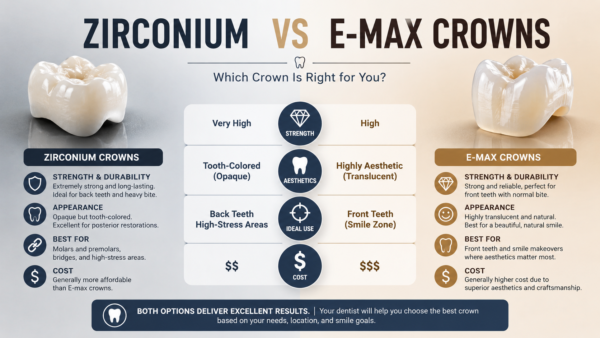
Read our zirconia and E-max crown comparison as preparation for the consultation. Simplified comparison graphics cannot determine your treatment, predict durability or establish a current price. Request the exact material description in your written proposal.
A practical treatment sequence to discuss
Step 1: initial information and a provisional proposal
Send the clinic a brief description of the issue, your preferred dates and the records you already have through its agreed channel. Ask what can be estimated remotely and what remains subject to examination. Share any deadline that limits your flexibility before booking travel.
Step 2: examination and informed agreement
At the appointment, confirm the diagnosis, alternatives, anticipated stages and costs. Ask for the opportunity to consider your choices. If several teeth are involved, request a tooth-by-tooth plan so that the reason for each proposed replacement is clear.
Step 3: removal, preparation and any temporary restoration
Ask how the tooth will be managed between appointments and whether you will have a temporary restoration. Confirm what you should do if it becomes loose or uncomfortable. Obtain practical instructions about eating and cleaning that apply to your own treatment.
Step 4: fitting, checks and handover
Before the final restoration is completed, ask how its appearance, contacts and bite will be checked. Speak up if something feels uncomfortable or does not match what you understood. Request a review plan and leave time to discuss any concern before your departure.
How long should you stay in Bodrum?
There is no reliable universal schedule for replacing old crowns. The number of teeth, additional care, laboratory arrangements and review needs can change the plan. Ask for a provisional appointment sequence and the circumstances that would require a longer stay or another visit.
Do not book a non-changeable return journey solely around an advertised same-week treatment promise. Ask whether your available time is sufficient for assessment, treatment and a final review. For a complex case, it may be better to separate assessment and definitive treatment rather than force both into a short holiday.
Your final clinical advice should also cover travelling after the treatment you actually receive. If the plan changes, ask whether your departure arrangements remain suitable. Hotel availability and flight tickets do not determine whether a dental procedure is ready to proceed.
What should the quotation include?
Request an itemised estimate so that two proposals can be compared fairly. A per-crown figure may not explain the total course of care. Ask what happens financially if the tooth requires an additional procedure or the replacement cannot be completed as first proposed.
- The teeth involved and the proposed restoration for each.
- Examination, necessary imaging and temporary restoration arrangements.
- The proposed material and the stage at which the plan becomes final.
- Any additional treatment that is excluded or conditionally priced.
- Review appointments, repair terms and follow-up arrangements.
- Whether accommodation and transfers are included or separately quoted.
Do not assume a written guarantee covers every future problem, treatment by another dentist or travel expenses. Ask for its actual conditions and exclusions. This guide does not publish a price because your treatment needs and the services included must be confirmed individually.
Aftercare for replacement crowns
Ask for a demonstration of cleaning around your restoration and any bridgework, together with advice about your own bite habits. Tell the dentist if you grind or clench so that the relevance of further assessment or protection can be discussed.
Before you leave, obtain the treatment summary, material information, relevant images where available and your next review date. Confirm whom to contact from home and when you should see a local dentist. Remote messages may help communication, but cannot replace every examination.
Our dental aftercare in Bodrum guide provides a fuller departure and follow-up checklist. If discomfort worsens, a restoration moves or you cannot chew comfortably, contact a dental professional instead of assuming that you must simply get used to it.
Frequently asked questions
Should a crown be replaced just because it is old?
Age alone is not a diagnosis. Ask a dentist to assess its condition, the supporting tooth and any symptoms. Discuss the benefits and risks of changing it compared with continued review.
Can I replace only one crown?
Ask whether treating the affected restoration alone is appropriate. The answer depends on the examination and whether it forms part of connected work. Do not assume that a full smile makeover is necessary.
Can a darker crown be whitened?
As the NHS teeth whitening guide explains, whitening lightens natural teeth rather than existing crowns. Discuss the source of the colour concern and the options before using whitening products or agreeing to replacement.
Will I definitely need root canal treatment?
No conclusion can be drawn from the crown’s age or appearance alone. Ask for a diagnosis and an explanation of any recommendation for root canal treatment.
Can everything be completed during my holiday?
This must be assessed individually. Ask what could extend the schedule, whether temporary work is planned and how much time should be reserved for review before travel.
What if my crown has already fallen out?
Keep it safely and seek dental advice. Avoid household glue or attempts to adjust it yourself. Significant pain or swelling needs prompt assessment rather than waiting for a planned trip.
Request an assessment for your existing crowns
Considering replacing old dental crowns in Bodrum? Tell Dentist Gumbet which restoration concerns you, what has changed and when you hope to travel. Ask which photographs and records the clinician needs and what can reasonably be discussed before an in-person examination.
Message Dentist Gumbet on WhatsApp: +90 544 881 13 11 to request an assessment and an individual quotation. Alternatively, use our contact page. Confirm the treating clinician, appointment availability and written terms before booking treatment.
This article provides general information, not an individual diagnosis or treatment recommendation. Your final treatment plan and suitability must be confirmed by a qualified dental professional after appropriate assessment.